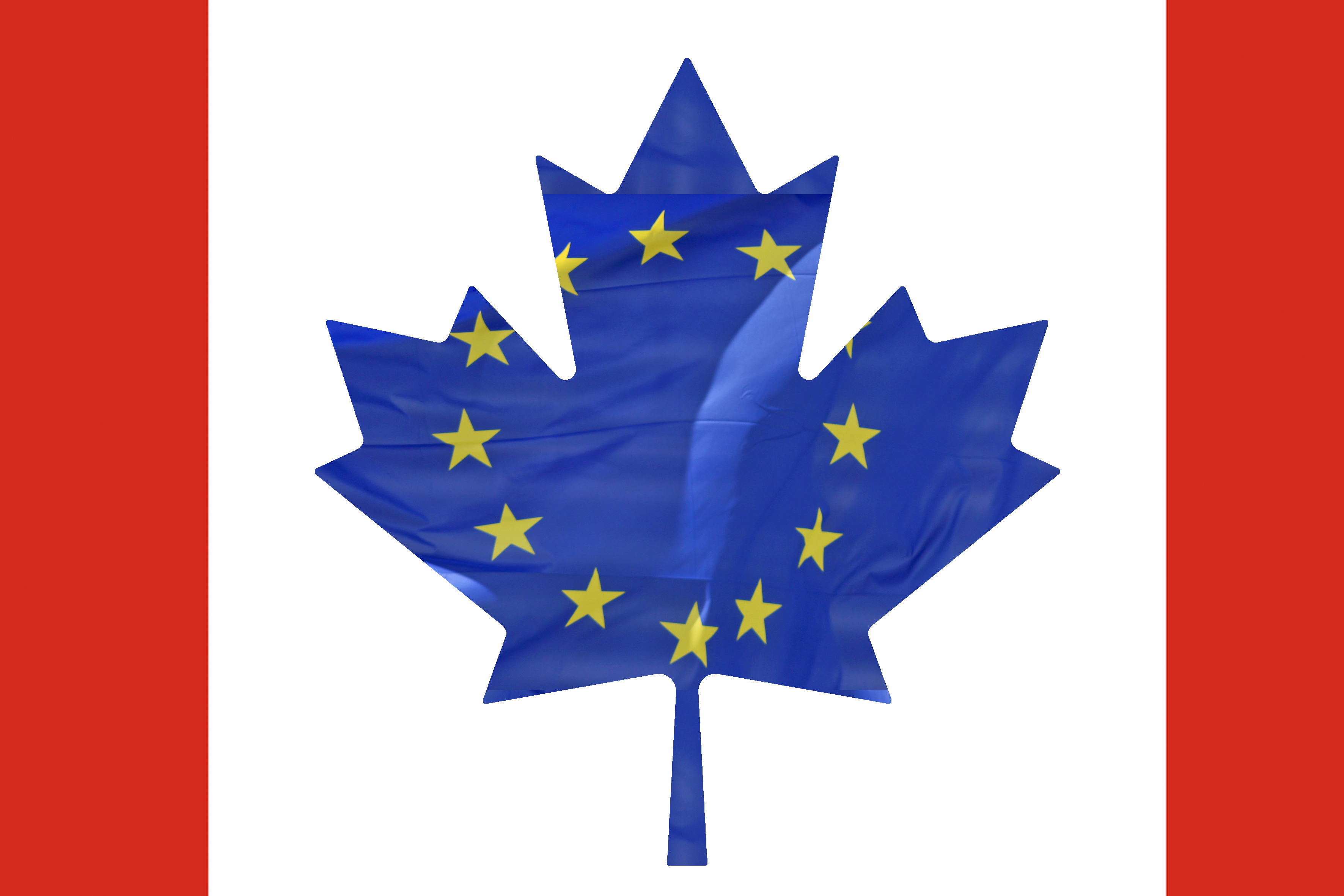
Last week, the EU and Canada met in Montreal to define the next steps in an already substantial partnership, built around the Strategic Partnership Agreement and the Comprehensive Economic and Trade Agreement (CETA). As Prime Minister Mark Carney suggested, the objective was less about finding the right marketing formula (read: “associate membership”) than about giving the relationship greater consistency and substance.
Closer EU–Canada cooperation opens new perspectives for businesses in digital technologies, AI, energy and critical raw materials. New trade arrangements, investment opportunities and more integrated supply chains could benefit companies operating on both sides of the Atlantic.
The main outcome was the launch of the Canada–EU Alliance for the Future, set out in the Joint Statement entitled Canada and the European Union Building Together an Alliance for the Future. Beyond the political language, what are the main takeaways?
Digital: from trade rules to technological cooperation
The Joint Statement marks the conclusion of negotiations on the Digital Trade Agreement (DTA). Complementing CETA, the agreement will establish a framework of rules for digital trade, providing greater legal certainty and predictability for businesses and consumers. It addresses issues such as cross-border data flows, electronic contracts, electronic signatures and consumer protection.
There is a substantial economic rationale behind this initiative. According to Eurostat, bilateral trade in digitally delivered services reached €19.8 billion in 2025 (€11.2 billion in EU exports to Canada and €8.6 billion in EU imports from Canada). The DTA should help facilitate further growth in this area. It is worth recalling, however, that the conclusion of negotiations is not the same as the agreement entering into force: formal signature and the respective approval procedures still lie ahead.
Other developments in digital cooperation are equally worth noting. Canada will participate in the European High-Performance Computing Joint Undertaking (EuroHPC JU), opening opportunities to pool supercomputing resources and strengthen cooperation in research and innovation. This is particularly relevant for the development of artificial intelligence and the integration of European and Canadian innovation ecosystems.
The agenda extends beyond computing. The two sides also intend to deepen cooperation on AI governance and security, digital infrastructure, secure connectivity and space technologies, including Galileo and IRIS². In other words, digital cooperation is gradually moving beyond the regulation of trade towards the infrastructure and technological capabilities that will underpin future competitiveness.
Foreign policy: familiar positions, greater coordination?
There are few surprises in the foreign policy section. Both sides reaffirm their commitment to multilateralism, international law and the rules-based international order, as well as their support for Ukraine and a two-state solution in the Middle East.
Nevertheless, the Summit provides an opportunity to give these shared positions a more operational dimension. On Ukraine, the EU and Canada reaffirmed their commitment to continued political, financial, military and humanitarian support, while also welcoming Canada’s intention to join the Ukraine Support Loan. Cooperation will also extend to reconstruction, institutional reforms and increasing pressure on Russia.
The Arctic is another area where closer coordination makes strategic sense. Both partners have a direct interest in the region’s security, resilience, connectivity and sustainable economic development. The launch of a dedicated Arctic dialogue should provide a framework for addressing these issues, including the security implications of growing geopolitical competition.
More broadly, the leaders agreed to accelerate implementation of their Security and Defence Partnership. Cooperation will cover defence industry, maritime and space security, sanctions, hybrid threats and resilience. Canada’s interest in strengthening its participation in EU Common Security and Defence Policy missions and operations is also noteworthy.
All of these suggest that the Summit confirms a gradual development of a more structured partnership in foreign policy, security and defence, with closer coordination across these issues.
Economic security: resources, energy and supply chains
The third dimension concerns economic security. The Joint Statement identifies critical raw materials, energy, clean technologies, semiconductors, pharmaceuticals and other strategic sectors as priorities for closer cooperation.
Canada’s resource base makes it a particularly relevant partner for the EU’s efforts to diversify supply chains and reduce strategic dependencies. The agreement being developed with the European Investment Bank should facilitate European investment in Canadian critical raw-materials projects, including extraction, processing and refining. The intention is to develop more integrated value chains, rather than simply secure access to raw materials.
Energy cooperation is another interesting element. The two sides will examine opportunities for long-term energy connectivity and investment, including through a joint feasibility study on Canadian LNG exports to Europe. This reflects the continuing importance of energy security, while the Joint Statement also stresses compatibility with their respective climate objectives.
These initiatives illustrate an increasingly important dimension of the EU–Canada relationship: the connection between trade, industrial policy and economic security. The objective is not simply to increase bilateral trade, but to develop more resilient supply chains and strengthen the industrial and technological capacities of both partners.
Beyond the formula
The Summit did not produce a spectacular political breakthrough. Nor did it settle the question of what a closer association between Canada and the EU might eventually look like. The expression “associate membership” remains politically sensitive and does not yet correspond to a defined institutional status.
For the time being, the most tangible progress lies elsewhere: in digital trade, high-performance computing, critical raw materials, energy and security cooperation. These are areas where the interests of the two partners increasingly converge and where cooperation can produce practical results.
The Summit therefore delivered less in terms of a new institutional formula than in terms of substance. Nothing spectacular, perhaps, but a clearer direction: a partnership moving beyond its traditional trade and political frameworks towards a more integrated economic, technological and strategic relationship.
Leave a Reply